AI Translation Explained: Smarter Communication in a Multilingual World

AI translation breaks language barriers, enabling global communication with speed, accuracy, and context-aware solutions for businesses and teams.
AI Translation

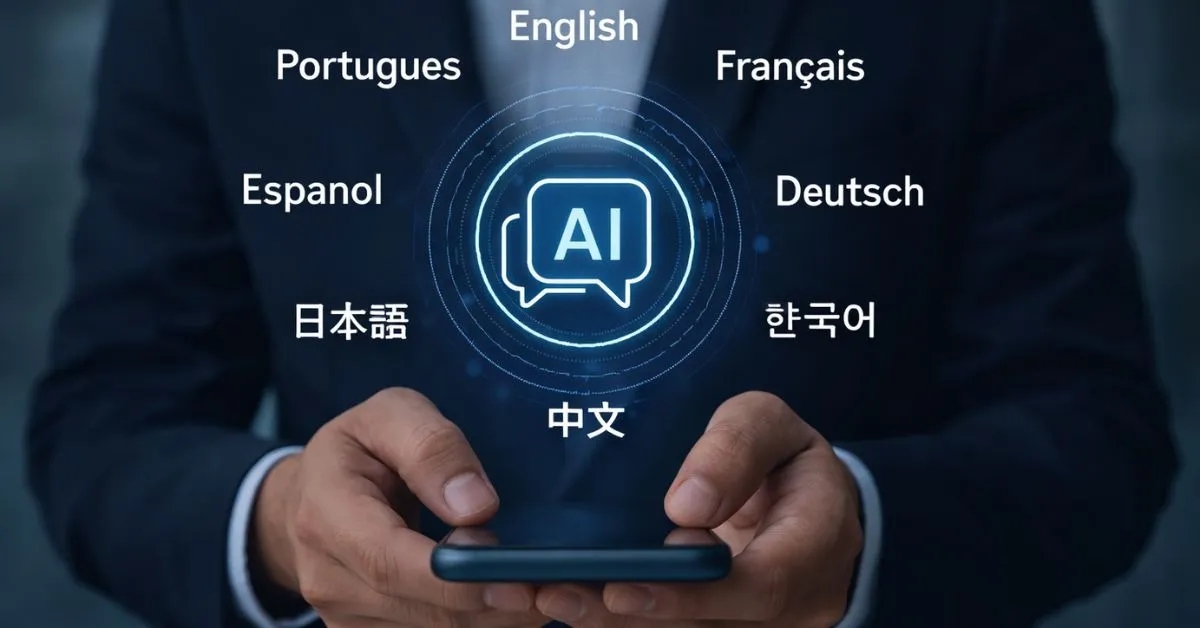
With the pace of globalization running high, inter-linguistic communication has turned into more than an infrequent need, not an issue these days. Businesses work with global teams, brands sell to customers globally, and digital content is consumed by customers far beyond geographic boundaries. Language differences may, however, slow down the case of misunderstandings and the limitation of growth. In this context, modern AI translation technology plays a pivotal role in companies' operations. Organizations use the intelligent platforms that today translate using AI to enable communication that is not only faster and more accurate but also more aware of the context. The world is connecting, collaborating, and sharing information in large volumes differently, thanks to the combination of AI and advanced linguistic models - the AI translation is at the forefront of this change.

What Is AI Translation?

The Evolution from Traditional to Intelligent Translation

AI translation is the application of artificial intelligence to translate text or speech from one language to another. The AI-driven translation systems, contrary to the conventional methods of translation, which rely on fixed rules or manually typed data, are trained on large multilingual collections of data. Consequently, they can identify patterns, context, and intent, and come up with translations that do not seem mechanical.

The Role of Neural Machine Translation

The basis of the present AI translation is Neural Machine Translation (NMT). NMT does not translate word-for-word, but rather sentences and paragraphs. As a result, tone, meaning, and structure are not lost in the complex or professional text.

How AI Translation Is Transforming Global Communication

Removing Language Barriers at Scale

The language barrier used to restrict international cooperation. The contemporary AI-powered translation will help achieve a constant and instantaneous understanding between different languages. Consequently, individuals and groups will be able to share their thoughts and pieces of information simultaneously. This transition aids in making faster decisions and providing information in a constant and uninterrupted manner.

Enabling Consistent Multilingual Content

Consistency is important to global brands. AI translation is used to maintain the consistency of messages used in different languages by using databases of terminologies and gaining context. This would secure brand voice without discriminating against content to suit different markets.

Key Benefits of AI Translation for Businesses

Faster Turnaround Times

One of the most important benefits of AI translation is speed. The translation of large amounts of text is possible in seconds, and this is highly efficient. This has seen businesses publish, localize, and respond at a faster rate than ever before.

Cost Efficiency and Scalability

AI translation lowers the costs of operation by automating translation processes. In addition, it is easy to scale, and thus it can be used in expanding organizations with increasing multilingual demands.

AI Translation for Global Teams and Remote Work

Supporting Cross-Border Collaboration

Communication between remote and international teams is prone to developing gaps owing to language differences. Translating machines can assist in closing such gaps as they allow people to communicate efficiently and clearly in emails, documents, and in-house.

Improving Real-Time Communication

Real-time AI translation will enable the participants to talk in a natural manner during meetings and have the time to get an instant translation. Such an ability enhances multilingual engagement, understanding, and teamwork.

Accuracy, Context, and Quality Control

Managing Technical and Industry-Specific Content

The current AI translation systems are capable of processing specialized texts with greater accuracy. They provide professional, legal, and technical documents with adequate translations through the use of contextual awareness and terminology management.

Human-in-the-loop translation models

Although AI translation is very efficient, human inspection provides an additional quality control. This is an amalgamation strategy that guarantees cultural sensitivity, linguistic subtlety, and adherence to local norms.

AI Translation and Customer Experience

Improving Multilingual Customer Support

Firm customers need fast and transparent communication. By providing assistance in various languages, AI translation helps businesses to make more of them satisfied and allows them to establish trust with a wider range of customers around the globe.

Building Global Brand Relationships

Brands establish better relationships by speaking intelligible languages to a native to a customer. AI translation makes sure that all touchpoints have the same tone and intent.

The Future of AI Translation

Continuous Learning and Smarter Outputs

The continuous enhancement of AI translation systems is the result of their utilization of updated data. Eventually, these systems will undoubtedly become superior to humans in the ways that they understand and interpret the nuances of language, moods, and regional variations, and consequently, their translations will be more reliable and accurate.

Beyond Text-Based Translation

The trajectory of AI translation is going deeper into voice, video, and multimedia. Presently, real-time speech translation and automated subtitling are modifying the ways in which worldwide spectators receive the content.

Conclusion

AI translation has turned into a basic instrument for global interaction and communication. It makes the processes quicker, cheaper, and easier, rather than the case with languages. Through the translation using AI, companies will not only break down language barriers but also retain their precision and effectiveness. The development of tech will push AI translation to the center of communication among businesses, teams, and customers in a world that is getting more interconnected and multilingual daily.

Last updated

Was this helpful?