
How AI Transforms Modern Wealth Management: From Portfolio Optimization to Hyper-Personalized Advice
AI transforms wealth management with portfolio optimization, hyper-personalized advice, risk management, and client engagement, enhancing advisor capabilities.
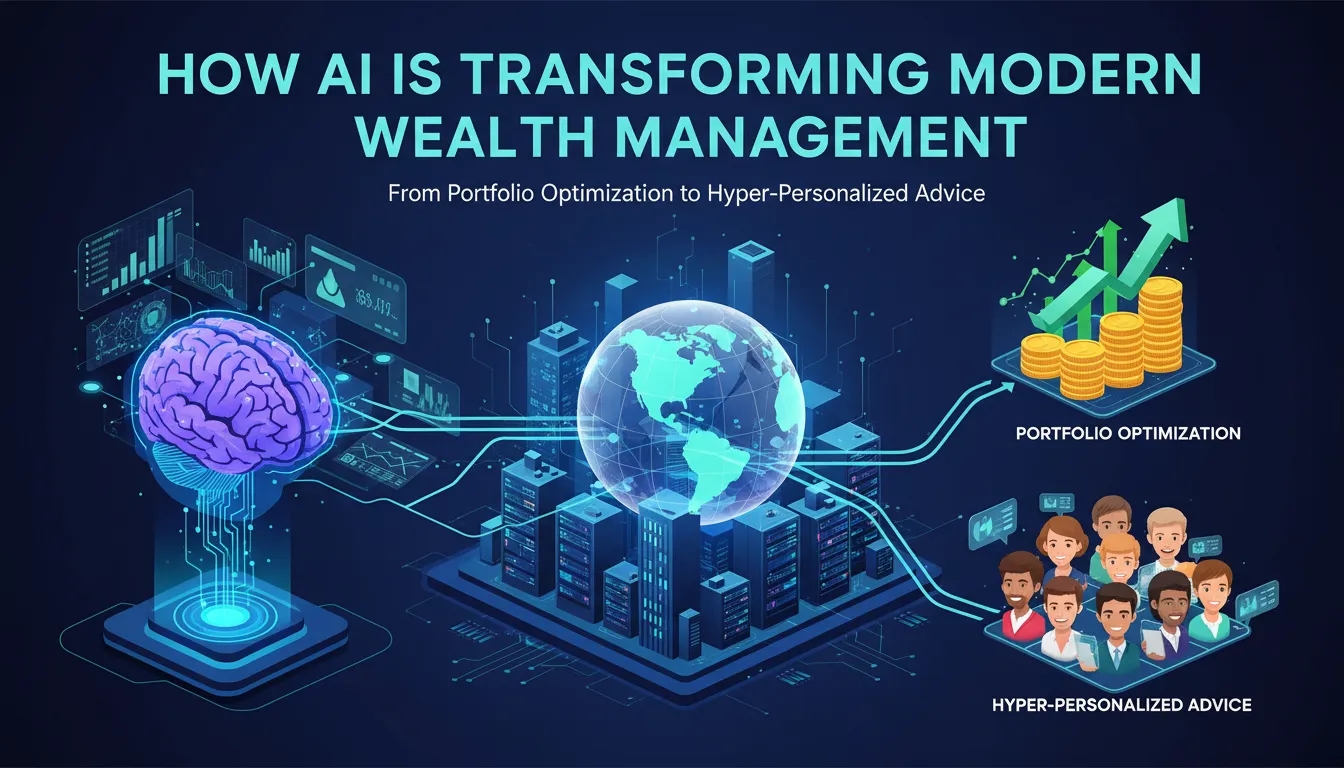
The demand changes quickly towards the wealth management firms from the customers. Clients demand better assessments, faster responses, and advice that is in line with their own financial goals. The markets are increasingly complex, and what may be even more important is making good choices.
AI is a new force affecting the wealth management industry. Rather than replacing human advisors, AI acts as an enhancer of their capabilities. It can sift through vast datasets in seconds, revealing patterns buried in market noise, and much more.
The Evolution of Wealth Management in the AI Era
Wealth management has always relied on data, judgment, and personal relationships. Traditionally, advisors used market knowledge, past performance, and direct client engagement to build portfolios and provide guidance. However, these traditional methods are no longer sufficient to remain competitive.
Eighty-eight percent of respondents say they use AI regularly in at least one business function, according to a McKinsey survey. The AI era has brought a new way of managing money that relies on data and is more and more automated. Early tools, like robo-advisors, showed how algorithms could manage different types of investments for many people at once. Since then, AI has gone far beyond simple automation and risk checking. Today’s wealth management systems use advanced computer methods to analyze large volumes of information, identify patterns that people might miss, and offer tailored investment plans.
AI-Powered Portfolio Optimization
Markets are now changing more quickly and are affected by many different things. AI helps create better investment mixes by using innovative computer programs and tools that can quickly process huge amounts of information that older methods cannot handle. Instead of just looking at past results or simple risk groups, AI checks things like how much the market goes up and down, signs of how the economy is doing, what people are feeling about the market, and other information like what customers are buying.
The main benefit of AI optimization is that it can find patterns and connections that standard analysis might miss. Machine-learning models keep learning from new data and update asset allocations as conditions change.
Hyper-Personalized Wealth Advice Through AI
AI is analyzing a wide range of client-specific data and turning it into tailored investment insights and financial recommendations. AI evaluates dynamic variables like spending habits, savings behavior, and cash flow trends.
AI can extend its prowess into objectives-based financial planning. Clients are presented with personal recommendations based on goals such as retirement or long-term preservation of wealth. Intelligent systems can rank goals, predict scenarios, and provide better saving or investing options.
Natural language processing plays an important role in understanding client conversations to uncover preferences or concerns.
AI in Client Experience and Engagement
Today’s investors expect fast answers, personal service, easy-to-use digital tools, and round-the-clock access to financial information. To meet these needs, wealth management firms are turning to AI to boost client engagement and deliver experiences on par with leading tech companies.
AI improves the client experience in many areas, including customer onboarding. Instead of filling out long forms and checking documents by hand, AI systems handle identity verification and collect data.
After onboarding, clients can use AI-powered virtual assistants and chatbots for real-time help. These tools answer common questions, help schedule meetings, and guide users through digital portals. Fast AI responses improve satisfaction and reduce wait times.
On the personalization front, AI brings major advantages. The more advanced systems look at preferences of the client, investment behavior, and communication style to determine which custom market updates, educational materials, and advice to send.
AI-Enhanced Risk Management and Compliance
AI models monitor portfolio performance, market trends, and risk at all times. They also help firms manage regulatory compliance. Wealth management companies need to stay updated on rules for KYC, AML, suitability, data privacy, and fiduciary duties. AI tools help by flagging suspicious activity, tracking rule changes, and ensuring documents are up to date.
AI, through an application of predictive risk analytics, assists in making better decisions. AI models can foresee possible economic downturns, liquidity problems, or investment risks based on integrating client data with various market signals and economic trends.
Integrating Alternative Data for Competitive Advantage
Wealth management firms use alternative data to discover new opportunities and make better decisions. AI helps by turning complex, unstructured data into clear insights.
Additionally, alternative data gives a competitive edge in client profiling and segmentation. AI can interpret behavioral signals to create a fuller picture of each client’s financial needs and risk tolerance.
Considerations about Challenges
AI systems depend on sensitive client data, so any breach or misuse can quickly damage trust. Wealth management firms should have strong cybersecurity, strict access controls, and follow all data protection rules. Being open about how client data is used helps keep clients confident.
Another challenge is algorithmic bias. This happens when AI models are trained using data that is incomplete or does not represent the full range of real-world situations.
It's usually when companies try to adopt artificial intelligence that they actually face challenges with respect to integration and change management. Integrating artificial intelligence with existing systems could naturally become very complex and could also potentially involve new investments in infrastructure, skilled people, and rules. Employees and advisors could also perceive threats to job security resulting from the new AI-driven processes or be unable to adapt to them.
Cost Considerations for Implementing AI in Wealth Management
Implementing AI in wealth management is a smart investment. The cost of developing and deploying AI solutions can vary greatly based on the technology’s complexity and range. According to ScienceSoft, building a custom AI-powered investment or wealth management solution usually costs between $100,000 and over $650,000.
A main reason for higher costs is how many features the AI tool has. Basic predictive tools or automatic reports are much easier to build than bigger systems that help manage investments, predict trends, measure risk, and give very detailed advice to clients.
Conclusion
The industry is still just starting to use AI, but one thing is clear: companies that start using new technologies now will help shape the future of wealth management. Those who wait may get left behind in a world where using data and offering personalized services are becoming normal. By using AI thoughtfully and with a plan, wealth managers can not only keep up with these changes but also be leaders.
Last updated