
Using AI to Detect Contract Risks Before They Become Legal Disputes
AI analyzes contracts to spot risks, missing clauses & ambiguities before they cause disputes—enabling proactive fixes & stronger agreements.
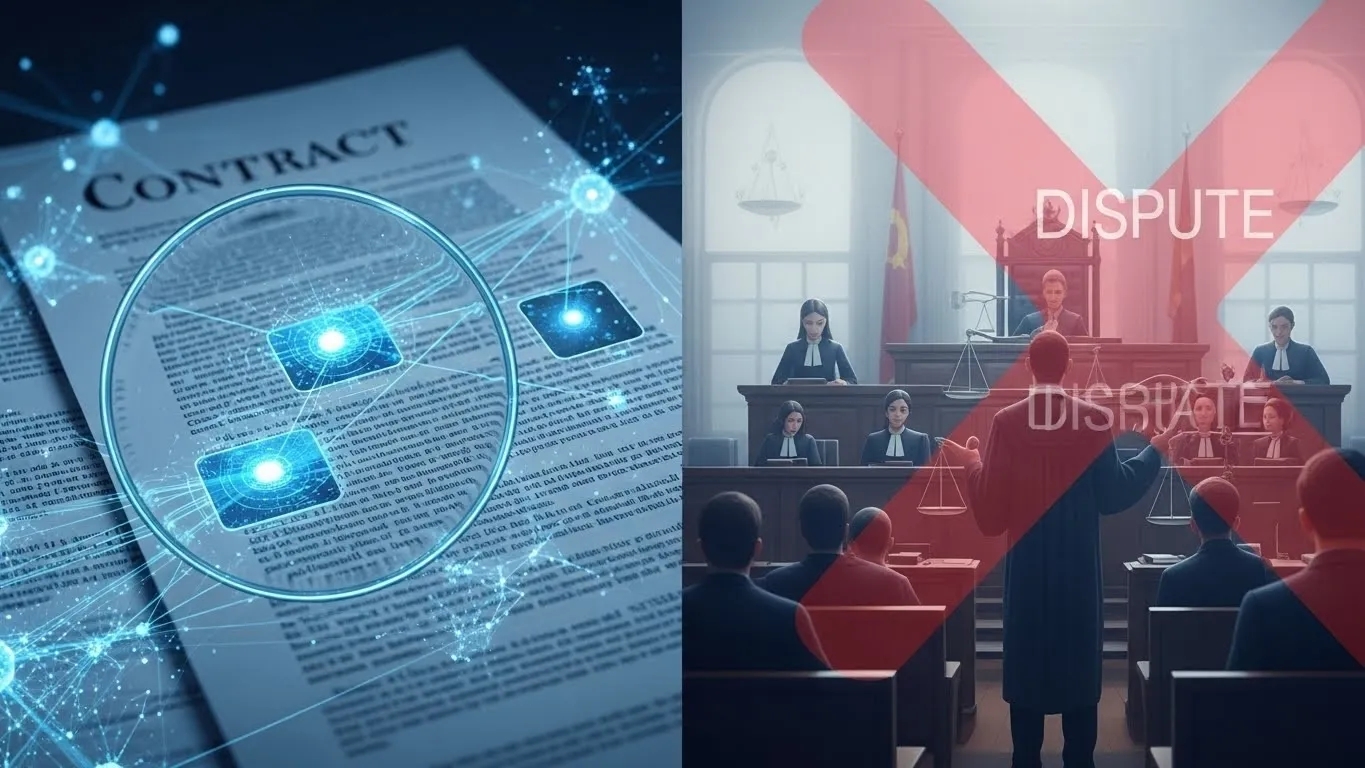
Contract disputes represent one of the most costly challenges facing businesses today, with litigation expenses, damaged relationships, and operational disruptions often far exceeding the actual monetary values in dispute. The traditional approach to contract risk management relies heavily on attorney review at the drafting stage, followed by manual monitoring during performance—a process that inevitably misses subtle issues buried in lengthy documents or fails to identify emerging problems until they've escalated into full-blown disputes. By the time most contract conflicts surface, positions have hardened, costs have accumulated, and resolution options have narrowed considerably.
AI for legal contract analysis is revolutionizing how organizations identify and mitigate contractual risks before they mature into expensive legal battles. Advanced artificial intelligence systems can analyze contract language with unprecedented thoroughness, identifying ambiguous terms, missing provisions, conflicting clauses, and unfavorable allocations of risk that human reviewers might overlook in documents spanning hundreds of pages. These technologies don't just flag problems; they provide context about why specific provisions create risk, how similar issues have played out in past disputes, and what modifications would better protect the organization's interests. As we progress through 2025, the gap between companies leveraging AI for proactive contract risk management and those relying solely on traditional review methods continues widening, with significant implications for legal costs, operational efficiency, and competitive positioning.
Understanding Common Contract Risks and Dispute Triggers
Contract disputes typically arise from a predictable set of risk factors that AI systems are particularly adept at identifying. Ambiguous language ranks among the most common culprits, where terms like "reasonable efforts," "promptly," or "substantial completion" lack precise definitions and allow parties to interpret obligations differently. Payment terms that don't clearly specify amounts, timing, conditions precedent, or dispute resolution procedures create frequent conflicts, as do delivery schedules with unclear milestones, acceptance criteria, or consequences for delays. Intellectual property provisions often contain gaps regarding ownership of derivative works, licensing scope, or post-termination rights that only become apparent when disputes arise over who owns what.
Liability and indemnification clauses present another major source of contract disputes, particularly when they contain vague language about what events trigger indemnification obligations, how defense costs are allocated, or what limitations apply. Force majeure provisions gained renewed attention during recent global disruptions, with many organizations discovering that their contracts either lacked these clauses entirely or defined triggering events so narrowly that they provided no protection when needed. Termination provisions frequently cause conflicts when they fail to specify clear grounds for termination, required notice periods, consequences of termination, or survival clauses for ongoing obligations. Change order and amendment procedures that don't establish clear authority, approval processes, and documentation requirements lead to disputes about whether modifications were properly authorized. AI systems trained on thousands of disputes can recognize these problematic patterns and flag them proactively, allowing organizations to address issues during negotiation rather than litigation.
How AI Analyzes Contract Language for Risk Indicators
Modern legal AI employs sophisticated natural language processing to understand contract provisions at a deeper level than simple keyword matching. These systems parse sentence structure, identify relationships between clauses, and understand context in ways that mirror human comprehension but operate at scale across entire contract portfolios. When analyzing an indemnification clause, AI doesn't just identify that one exists; it evaluates whether the scope appropriately covers relevant risks, whether carve-outs are reasonable, whether caps on liability align with potential exposure, and whether the language would likely be enforceable in the governing jurisdiction. This contextual analysis allows the system to distinguish between standard protective provisions and genuinely problematic language that creates unacceptable risk.
AI contract analysis platforms incorporate multiple analytical layers that examine documents from different risk perspectives. Linguistic analysis identifies ambiguous terms, undefined acronyms, inconsistent terminology across sections, and complex sentence structures that create interpretation challenges. Completeness analysis compares contracts against comprehensive checklists of provisions typically included in similar agreement types, flagging missing clauses that could leave gaps in protection. Comparative analysis benchmarks specific terms against market standards, identifying outlier provisions that allocate risk unusually favorably or unfavorably compared to typical agreements. Conflict analysis detects internal contradictions where different contract sections impose inconsistent obligations or grant contradictory rights. Compliance analysis checks whether provisions align with applicable laws, regulations, and internal policies. This multi-layered approach ensures that risks are identified regardless of whether they stem from what's included, what's missing, or how provisions interact with each other.
Predictive Risk Scoring and Prioritization
One of the most valuable capabilities of AI for legal risk management is the ability to score contracts based on overall risk levels and prioritize attention accordingly. These systems analyze dozens of risk factors across each agreement, weighting them based on their likelihood of causing disputes and their potential financial impact if disputes arise. A contract with aggressive penalty clauses, short cure periods, broad indemnification obligations, and vague performance standards would receive a high-risk score, triggering immediate review by senior legal staff. Conversely, straightforward agreements with standard terms, clear obligations, balanced risk allocation, and proven templates might score low risk and require only automated monitoring during performance.
The predictive models underlying these risk scores continuously improve as they process more contracts and observe actual outcomes. When disputes do arise, the AI learns which risk factors and language patterns were present in those problematic agreements, refining its ability to spot similar issues in future contracts. Some advanced systems incorporate external data sources, analyzing court decisions, arbitration outcomes, and settlement databases to understand how specific types of provisions perform when disputed. This empirical approach to risk assessment provides more reliable guidance than subjective attorney judgment alone, particularly for organizations handling thousands of contracts where individual review of every agreement would be prohibitively expensive. The prioritization capabilities allow legal departments to efficiently allocate their limited resources, focusing intensive review on genuinely high-risk agreements while using automated monitoring for lower-risk contracts that still benefit from AI oversight.
Real-Time Monitoring and Alert Systems
Contract risk management doesn't end when agreements are signed; many disputes arise during contract performance when circumstances change or obligations come due. AI legal monitoring systems track active contracts continuously, alerting organizations to emerging risks before they escalate into formal disputes. These systems monitor for approaching deadlines, triggering automatic reminders for renewal decisions, notice requirements, or performance milestones. They track counterparty performance indicators, flagging when the other party misses deliverables, makes late payments, or exhibits other warning signs of potential breach. Some advanced systems integrate with project management tools, financial systems, and communication platforms to gather performance data automatically rather than relying on manual updates.
The intelligence of modern monitoring extends to detecting subtle risk indicators that human contract managers might miss. AI systems can identify patterns suggesting relationship deterioration, such as increasing frequency of disputes over minor issues, changes in communication tone detected through sentiment analysis, or requests for contract interpretation that signal differing understandings of obligations. When external factors like market conditions, regulatory changes, or force majeure events occur, AI can identify which contracts in a portfolio are potentially affected and assess how specific provisions might apply to new circumstances. This proactive monitoring allows organizations to initiate conversations with counterparties about potential issues while goodwill remains strong and before positions harden into adversarial stances. Early intervention often resolves concerns through simple amendments or clarifications that prevent costly disputes, making these monitoring capabilities among the most valuable aspects of AI contract risk management.
Identifying Missing or Weak Protective Provisions
A significant source of contract disputes stems not from what agreements say but from what they don't say—gaps in coverage that become apparent only when issues arise. AI systems excel at identifying these omissions by comparing contracts against comprehensive databases of provisions typically included in similar agreement types. When analyzing a software licensing agreement, the AI might flag the absence of service level commitments, data security requirements, source code escrow provisions, or disaster recovery obligations that would be standard in comparable deals. For construction contracts, missing provisions around change order procedures, inspection rights, lien waivers, or weather delay protocols create predictable disputes that proper drafting would prevent.
Beyond simply identifying missing provisions, sophisticated AI platforms assess whether existing protective language is sufficiently robust or contains weaknesses that undermine its effectiveness. A termination for convenience clause might be present but lack clear payment obligations for work completed, creating disputes about final compensation. An intellectual property assignment might exist but fail to address moral rights, derivative works, or sublicensing rights comprehensively. Insurance requirements might specify coverage amounts but not address named additional insureds, notice requirements, or maintenance of coverage through contract completion. Force majeure provisions might list qualifying events but lack clear procedures for invoking protection, temporary suspension versus termination rights, or allocation of costs during force majeure periods. By identifying both complete omissions and insufficient provisions, AI helps organizations strengthen contracts before execution rather than discovering gaps when disputes make strengthening impossible.
Analyzing Contracts Against Company Policies and Standards
Most organizations maintain contracting standards, approved clause libraries, and risk tolerance policies that should guide agreement terms, but ensuring compliance across hundreds or thousands of contracts proves challenging through manual review. AI systems can automatically compare contracts against organizational standards, flagging deviations that require explanation or approval. When a sales contract proposes payment terms of Net 90 but company policy requires Net 30, the AI immediately alerts reviewers to seek appropriate approvals or renegotiate terms. When an agreement omits required insurance coverage, arbitration clauses, or data protection provisions specified in company templates, automated alerts ensure these gaps are addressed before execution.
This policy compliance analysis extends beyond simple presence-or-absence checking to evaluate whether provisions align with organizational risk tolerances even when they don't violate explicit policies. If a company typically limits liability to contract value but a proposed agreement contains unlimited liability exposure, the AI flags this deviation as requiring senior leadership approval even if no formal policy prohibits it. When contract terms drift from established standards—longer payment periods, shorter termination notice requirements, more aggressive indemnification language—the cumulative effect might significantly shift risk profiles without any single deviation appearing problematic. AI systems can analyze these trends across contract portfolios, identifying gradual standard erosion that increases organizational risk exposure. This portfolio-level analysis provides insights impossible through individual contract review, allowing legal departments to recalibrate standards, provide additional training to business teams, or implement stricter approval requirements for high-risk deviations.
Integration with Contract Lifecycle Management
The full value of AI risk detection emerges when integrated throughout the contract lifecycle from initial drafting through negotiation, execution, performance monitoring, and eventual renewal or termination. During drafting, AI provides real-time guidance to business teams using self-service contract generation tools, steering them toward approved language and flagging when their modifications introduce risk. Throughout negotiation, AI tracks proposed changes from counterparties, assessing whether each redline increases or decreases risk exposure and providing negotiating teams with data-driven insights about which concessions matter most. Before execution, final AI review ensures no problematic provisions survived negotiation and all required approvals were obtained for standard deviations.
Post-execution, AI transitions to monitoring mode, tracking obligations, deadlines, and performance while maintaining risk awareness throughout the contract term. As renewal dates approach, AI analyzes performance history to identify problematic provisions that should be renegotiated, assess whether the relationship remains valuable, and recommend whether renewal or termination better serves organizational interests. When contracts do require amendment, AI ensures modifications maintain internal consistency with existing provisions and don't create new conflicts or gaps. This lifecycle integration creates continuity in risk management rather than the fragmented approach where drafting, negotiation, and performance monitoring occur in silos with different tools and inconsistent risk assessments. Organizations achieving this integrated approach report dramatically fewer disputes, faster resolution of issues that do arise, and more favorable contract terms resulting from data-driven negotiation strategies.
Training AI Systems on Organization-Specific Risks
While AI contract analysis platforms arrive with sophisticated baseline capabilities trained on vast datasets of agreements and disputes, their value increases substantially when customized to reflect organization-specific risks, priorities, and experiences. Legal departments can train AI systems on their historical disputes, teaching the technology to recognize the specific fact patterns, contract provisions, and counterparty behaviors that have previously caused problems for their organization. If a company has repeatedly faced disputes over intellectual property ownership in joint development agreements, the AI learns to scrutinize IP provisions in similar contracts particularly carefully and recommend language that has proven effective in past negotiations.
Organization-specific training also incorporates industry context, regulatory environment, and strategic priorities that affect risk tolerance. A heavily regulated financial services firm might train its AI to flag any provision potentially implicating compliance obligations, even if the contract language wouldn't concern companies in less regulated industries. A startup prioritizing speed-to-market might configure its AI to accept higher contractual risks in supplier agreements if they enable faster delivery, while a mature enterprise might prioritize stability and conservative terms. As the AI processes more of an organization's contracts and observes outcomes, its recommendations become increasingly tailored and valuable. Some advanced systems incorporate feedback loops where attorneys explicitly mark AI suggestions as helpful or unhelpful, allowing the system to calibrate its sensitivity, reduce false positives, and focus attention on risks that genuinely concern that particular organization rather than applying generic risk assessments.
Cost-Benefit Analysis of AI Contract Risk Detection
Implementing comprehensive AI contract risk management requires meaningful investment in technology, integration, and organizational change management. Licensing costs for enterprise-grade AI legal platforms typically range from $50,000 to $500,000 annually depending on contract volumes, user counts, and feature sophistication. Integration with existing contract management, matter management, and business systems adds implementation costs of $25,000 to $250,000. Training, change management, and initial system configuration require additional investment of time and resources. For smaller organizations with limited contract volumes and straightforward agreements, these costs might exceed the value delivered, particularly if the organization has experienced few disputes historically.
However, for enterprises managing substantial contract portfolios or operating in dispute-prone industries, the return on investment from AI risk detection typically proves compelling. Avoiding even a single significant dispute often justifies the entire annual technology investment, as litigation costs, settlement amounts, relationship damage, and management distraction from major contract disputes frequently reach hundreds of thousands or millions of dollars. Beyond dispute avoidance, AI contract risk management delivers value through improved contract terms that better protect organizational interests, faster contract negotiation cycles as fewer provisions require extensive back-and-forth, reduced legal department workload allowing counsel to focus on strategic matters, and better relationships with counterparties as issues are addressed collaboratively rather than adversarially. Organizations implementing comprehensive AI contract risk systems typically report 30-50% reductions in contract disputes within two years, alongside improvements in contract compliance, performance monitoring, and portfolio visibility. When these benefits are quantified and compared against implementation and operating costs, most enterprises find that AI contract risk detection ranks among their highest-ROI legal technology investments.
Future Trends in AI Contract Risk Management
The evolution of AI for legal contract risk management continues accelerating, with emerging capabilities promising even more sophisticated dispute prevention. Natural language generation technology will enable AI systems not just to identify problems but to automatically draft improved language that addresses risks, maintaining the commercial intent while eliminating ambiguity and filling gaps. These systems will suggest specific redlines during negotiation, explaining to business teams why proposed changes reduce risk and providing data on how similar terms have performed in past agreements. Predictive models will become increasingly accurate at forecasting not just whether disputes might arise but estimating their likely costs, durations, and outcomes based on specific contract provisions and counterparty characteristics.
Integration with external data sources will enhance AI risk assessment capabilities significantly. Systems will monitor counterparty financial health, litigation history, and industry reputation, adjusting contract risk scores based on who the organization is contracting with, not just the agreement terms. When counterparty financial stress indicators emerge during contract performance, AI will proactively recommend protective actions like requiring additional security or accelerating payment schedules before default occurs. Machine learning models trained on vast repositories of court decisions will provide jurisdiction-specific guidance about how particular provisions are likely to be interpreted and enforced, allowing organizations to draft with confidence about outcomes if disputes do arise. As these technologies mature, the line between contract drafting, risk management, and dispute prevention will blur, with AI providing comprehensive support throughout the contract lifecycle that makes formal disputes increasingly rare—not because organizations accept unfavorable terms but because they identify and address issues collaboratively before adversarial positions develop.
Last updated